


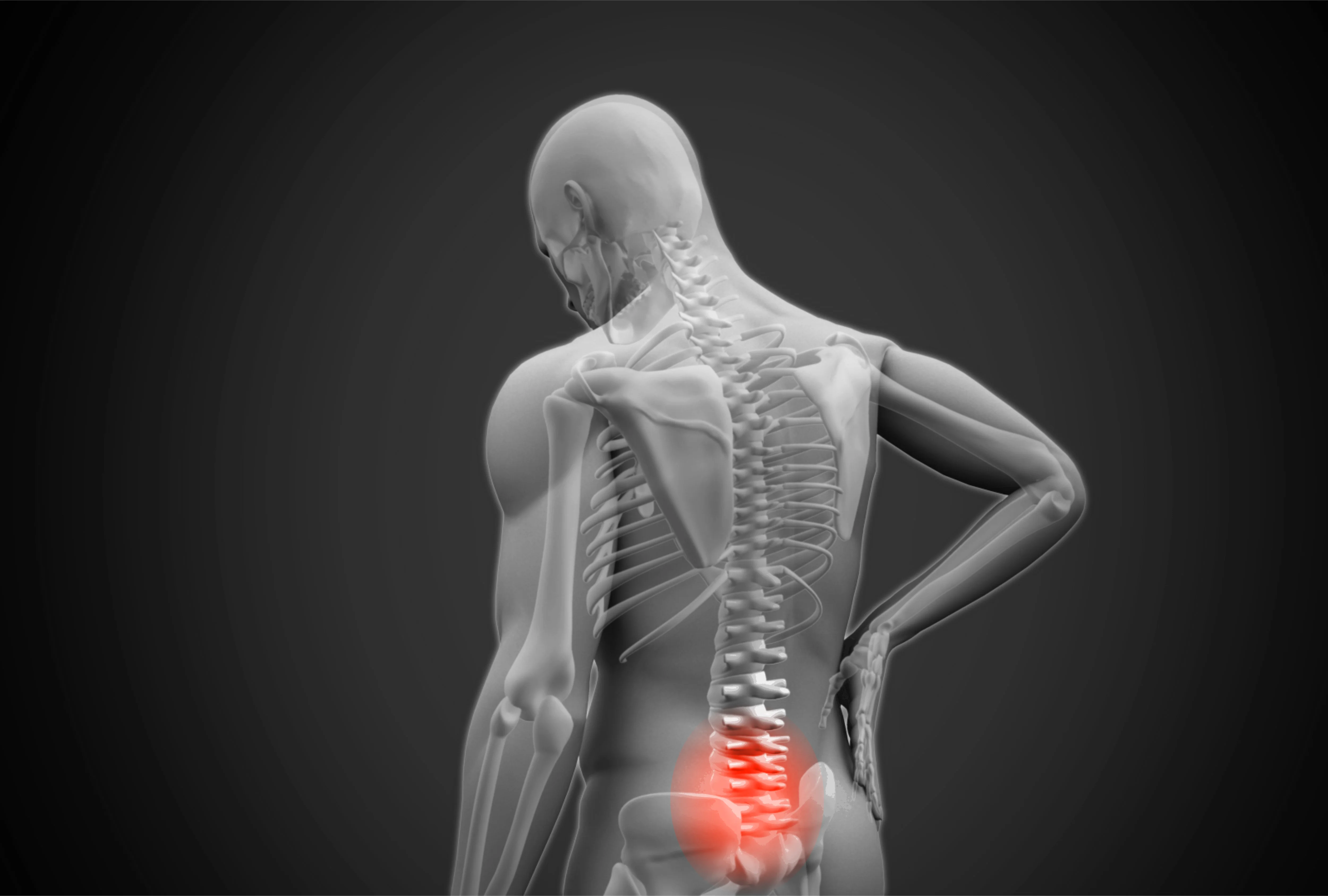
What is cauda equina syndrome and why is it treated as a medical emergency?
The cauda equina is the bundle of nerves that are at the end of the spinal cord. These nerves branch out at the lower part of the spine and into the coccyx and extend outwards., resembling a horse’s tail. “Cauda equina” is Latin for horse’s tail.
Cauda equina syndrome is a rare but serious spinal emergency. It arises when the cauda equina nerves at the bottom of the spine are compressed. This can frequently be caused by a slipped disc that has worsened, often in a rapid manner, although there can be other causes, such as an injury or infection to the area.
The cauda equina nerves are vital in the control of bladder function, bowel function, sexual function, sensation around the buttocks, genitals and the inner thighs, as well as movement and sensation in the legs. If the nerves are compressed, they can become damaged. The longer the compression lasts, the more severe the damage can become.
If treatment of cauda equina nerve compression is delayed, the consequences can be:
- Permanent bladder problems or incontinence
- Permanent bowel problems or incontinence
- Sexual dysfunction
- Weakness or paralysis in the legs
- Lifelong disability and loss of independence.
Because of the serious consequences of these injuries, cauda equina syndrome is considered a surgical emergency. The earlier diagnosis and treatment is received, the higher chance that a significant permanent injury can be reduced or avoided all together.
What are the “red flag” symptoms of Cauda Equina Syndrome? When should action be taken?
Not all episodes of severe back pain are because of cauda equina syndrome. However, this can be the symptom that is most debilitating for patients. It is also not uncommon for patients who suffer from cauda equina syndrome to already be suffering from sciatica or other back complaints.
Diagnosis of cauda equina syndrome requires careful consideration of the patient’s condition, whether they are experiencing ‘red flag’ symptoms as well as confirmation of compression of the cauda equina on MRI.
Cauda equina syndrome may be indicated by severe lower back pain, with or without shooting pain down the leg(s), together with any of the following symptoms. These should be urgently assessed by a medical professional as they are red flag symptoms:
Bladder symptoms
- Difficulty starting to pass urine
- Reduced feeling when urinating
- Difficulty controlling urine flow
- New urinary leakage or incontinence
- Not knowing when the bladder is full or empty.
Sensory changes (which is referred to as saddle numbness)
- Numbness, tingling, or altered sensation around:
- The genitals
- The anus
- The buttocks
- The inner thighs ("saddle area")
- Altered sensation when wiping after using the toilet.
Bowel symptoms
- Loss of control of bowel movements
- Bowel leakage
- Loss of sensation when passing a bowel motion
- Loss of feeling that the rectum is full.
Leg symptoms
- Significant weakness in one or both legs
- Progressive deterioration in leg strength
- Severe weakness affecting walking or foot movement
Sexual symptoms
- Loss of genital sensation
- Difficulty achieving an erection
- Difficulty ejaculating
- Changes in sexual function that are new and unexplained.
If you have these symptoms, only an MRI can confirm whether they are being caused by compression to the cauda equina nerves. If the diagnosis is confirmed, then the patient will be referred for emergency spinal surgery. The purpose of the surgery is to reduce the pressure on the cauda equina nerves to prevent further damage.
When does a diagnosis of cauda equina syndrome result in a medical negligence claim?
If you have experienced a delayed diagnosis of cauda equina syndrome, you may have a claim for medical negligence.
Examples of what can lead to a medical negligence claim can be: -
- Failure to recognise that red flag symptoms such as bladder disturbance, saddle numbness, bowel symptoms, or progressive leg weakness may be due to cauda equina syndrome.
- Failing to arrange an urgent MRI scan when cauda equina syndrome is suspected.
- Assuming symptoms are caused by ordinary back pain or sciatica without considering cauda equina syndrome.
- Relying on physical examination findings, a normal rectal examination, or a normal bladder scan result to rule out cauda equina syndrome when red flag symptoms are present.
- Delaying an MRI scan.
- Delaying surgical treatment after cauda equina syndrome has been diagnosed.
Every cauda equina medical negligence case is different and whether you have a claim will depend on what happened to you, but if any of the above has resulted in an injury or a situation where you should have had a better outcome, then you may have a claim.
MDS specialises in cauda equina syndrome medical negligence claims, and we have succeeded in cases involving:
- Delay in the diagnosis of an epidural abscess caused cauda equina compression.
- Failure of an ambulance service to transport a patient to hospital for assessment.
- Failure to a patient refer to a specialist spinal unit.
- Failure to perform an MRI when the patient had cauda equina red flag symptoms.
- Providing inadequate advice to a patient about the red flag symptoms to look out for in relation to cauda equina syndrome.
These patients suffered severe lifelong consequences which should have been avoided. We obtained compensation for them to help them manage the life-changing impact of cauda equina syndrome.
What evidence is needed in a Cauda Equina claim?
Your version of events recorded in your witness statement together with the information and the symptoms that you reported to the health professionals that was noted in your medical records are both very important.
We work with the best expert witnesses in the country in our cauda equina claims, so that we can trust the advice we give to you about your case.
Often in cauda equina syndrome cases, expert reports are required from many different medical specialities, including A&E, radiology, neurosurgery, GP, orthopaedic, physiotherapy, osteopath.
When we look at how the negligence has impacted you, we might need reports from other specialities, including urology or gynaecology, colorectal, accommodation, care, rehabilitation, and psychiatric.
How long do I have to bring a Cauda Equina claim?
In most cases, a claim must be brought within three years of the incident itself, or within three years of the date you first became aware that negligence may have occurred.
Different rules can apply for children and for patients who lack capacity, so it is important to seek legal advice as early as possible.
If you want to talk to us about a cauda equina claim, contact us as soon as possible.
What should I do if I think I have a Cauda Equina claim?
If you are concerned about a delay in diagnosis of cauda equina syndrome, it is helpful to prepare a clear timeline while the events are still fresh in your mind.
The timeline should include when your symptoms started, who you contacted, what you told them, what advice you were given, when any scans or referrals took place, when you were diagnosed, and when surgery was carried out (if it was). You should keep copies of any letters, appointment records, and information showing how the delay has affected your daily life, work, care needs, and future plans.
These claims can be highly complex and therefore it is recommended that you seek specialist legal advice as soon as possible.
If you have been diagnosed with cauda equina syndrome, regardless of whether you believe it was as a result of negligence, it can be helpful to have support from others who have been in a similar situation.
We partner with Cauda Equina Champions Charity, a patient-led charity who have been instrumental in promoting awareness of cauda equina syndrome and who provide support to people who have been diagnosed with the condition.

Quote from author Lauren Kerse, Associate Director and Specialist Medical Negligence Solicitor from MDS, said “Cauda Equina Syndrome is a devastating diagnosis which can cause life altering injuries if treatment has not been provided in a timely manner. It is important to seek legal advice if you believe that your treatment was compromised by delay. Regardless of whether you believe there has been negligence, seeking support from Cauda Equina Champions Charity can also make this difficult period easier to bear”


