


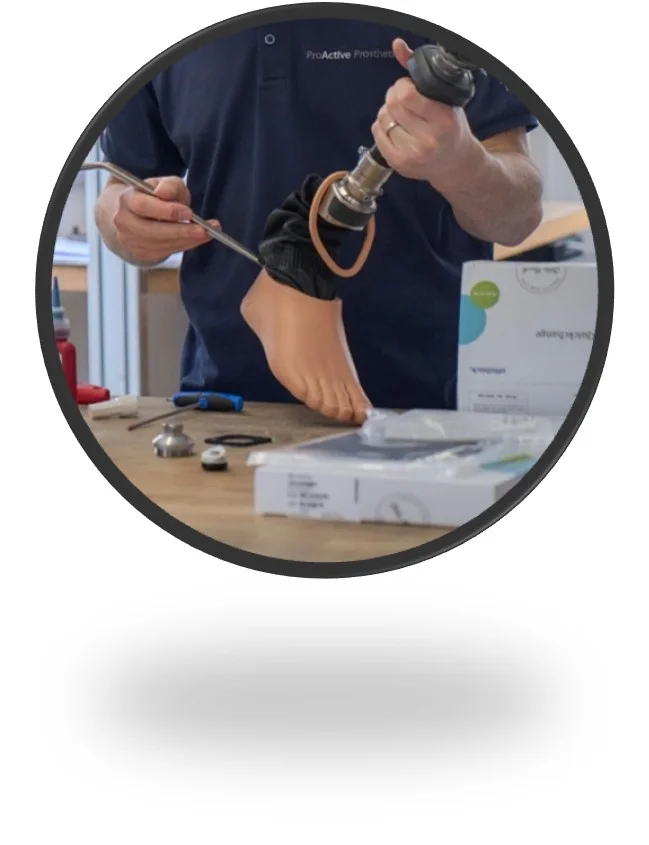
When people think about prosthetics, they often picture a single artificial leg designed simply to help somebody walk again. The reality is far more sophisticated and far more personal.
At a recent lunch and learn session we were delighted to be joined by prosthetist Katy McIntosh from Proactive Prosthetics & Orthotics who gave an insight into the modern world of lower limb prosthetics, rehabilitation and recovery. What emerged was a powerful reminder that successful rehabilitation is not just about replacing a limb. It is about helping somebody rebuild independence, confidence and identity after life-changing injury.
Every amputation journey is different
One of the strongest themes from the session was that there is no “standard” amputee pathway.
Some people want to get back to hiking. Others want to return to work, play sport, wear certain shoes, swim independently or simply feel comfortable taking their children to school. Prosthetic rehabilitation must reflect the person in front of you, rather than forcing everyone into the same model of care.
Katy described one patient whose priority was not everyday function initially, but getting back on his bike with his children. Once that goal was achieved, he became far more engaged with the wider rehabilitation process.
That focus on individual goals can have a huge impact on recovery, motivation and mental wellbeing.
Prosthetic limbs are far more advanced than many people realise
For many people, the perception of a prosthetic limb is still relatively basic. In reality, modern lower limb prosthetics are highly engineered devices designed to improve stability, efficiency, comfort and independence in very different environments and activities.
Some prosthetic systems now incorporate sophisticated microprocessor technology capable of continuously monitoring movement and adapting in real time. Katy explained that certain microprocessor knees can assess movement patterns many times per second, identifying changes in terrain, walking speed, slopes, stairs or trips, before automatically adjusting resistance and support accordingly.
These systems are designed not only to improve mobility, but also to reduce falls risk, improve gait symmetry and minimise strain on the rest of the body. That can be particularly important in protecting the hips, spine and remaining limb from long-term overuse injuries.
The session also highlighted how prosthetics are increasingly tailored to the individual rather than designed as a “one size fits all” solution.
Different prosthetic limbs may be prescribed for:
- everyday mobility
- running and high-impact sport
- swimming and water activities
- cycling
- skiing
- hiking
- occupational demands
- cosmetic preferences
- different footwear or heel heights
Some devices are specifically designed for energy return and athletic performance, whilst others prioritise stability, comfort or waterproofing.
An especially interesting example discussed during the session was the development of activity-specific prosthetics that do not necessarily attempt to replicate the appearance of a natural foot. For example, specialist climbing prosthetics may be designed with short, rigid, highly functional components that allow better visibility and precision when climbing, rather than focusing on cosmetic appearance.
The use of 3D printing technology is also creating increasingly bespoke solutions for patients with unique functional goals or anatomical challenges. This allows clinicians to customise components for highly specific activities and improve comfort, adaptability and performance.
Importantly, the session reinforced that prosthetic prescription is not purely about technology. The most advanced device is not automatically the best device for every person. Careful assessment, rehabilitation input and real-world trials are often needed to identify which components genuinely improve somebody’s day-to-day life.
Some individuals may benefit significantly from trialling different prosthetic feet or knee systems over several weeks within their own home and community environments before long-term recommendations are made.
What is clear is that the pace of innovation within prosthetic care continues to evolve rapidly, offering opportunities that many people may not realise are now available through specialist rehabilitation pathways.
Why the right prosthesis matters
The right prosthesis can have a profound impact on almost every aspect of somebody’s recovery, independence and long-term wellbeing.
Prosthetic provision is not simply about whether somebody can walk. It is about how safely, comfortably and efficiently they can move through everyday life.
A poorly suited prosthesis can contribute to:
- fatigue and reduced stamina
- falls and instability
- back, hip and knee pain
- skin breakdown and discomfort
- reduced confidence outdoors
- avoidance of activities and social situations
- long-term strain on the remaining limb
By contrast, the right prosthetic setup can improve mobility, reduce pain, support better posture and gait mechanics, and allow somebody to regain confidence in activities that may initially have felt impossible following amputation.
As outlined during our session, many individuals are technically able to mobilise with a basic prosthetic limb, however there can be a significant difference between “getting by” and moving well enough to protect the body over the long term.
This distinction is particularly important because many amputees naturally compensate by placing increased load through their unaffected leg and other joints. Over time, this altered movement pattern can contribute to secondary complications affecting the hips, knees and lower back. Effective prosthetic prescription and rehabilitation aim to minimise these compensatory patterns as much as possible.
The session also highlighted that the “best” prosthesis is not necessarily the most expensive or technologically advanced device available. The right prosthetic limb is the one that best matches the individual’s lifestyle, goals, physical ability and rehabilitation stage.
For some people, stability and safety in everyday mobility may be the priority. For others, independence at work, returning to parenting responsibilities or resuming sport may be equally important. A prosthetic limb that works well for walking around a clinic may not perform well on uneven ground, in the workplace or during higher-level physical activity.
Katy used the analogy of a Swiss Army knife versus a scalpel. One device may be capable of doing many things reasonably well, but activity-specific prosthetics are sometimes needed to allow people to perform particular tasks safely, comfortably and effectively.
The discussion included examples of:
- running blades designed for energy return and speed
- waterproof limbs for swimming and showering
- specialist climbing prosthetics designed for precision and visibility
- skiing prosthetics that clip directly into bindings
- prosthetics adapted for different footwear and heel heights
Importantly, the right prosthesis can also have a significant psychological impact. Regaining confidence in movement, social situations, work or sport can play a major role in emotional recovery and rebuilding independence after life-changing injury.
In one case study, a patient who had severe nerve damage and pain was technically able to jog using a standard prescription. However, after being fitted with a sport-specific device tailored to his goals, his running became smoother, more symmetrical and significantly less painful. He later returned to competitive obstacle racing.
The message was clear: the right prosthetic limb can fundamentally change somebody’s quality of life and level of independence.
The importance of rehabilitation and MDT (multi-disciplinary team) support
Prosthetics alone are only one part of the picture.
Effective rehabilitation often requires coordinated input from a multidisciplinary team including:
- Prosthetists
- Specialist physiotherapists
- Occupational therapists
- Pain specialists
- Surgeons
- Psychologists
- Case managers
The process is not simply about helping somebody stand or mobilise. It is about enabling them to move confidently, safely and efficiently in a way that protects their long-term health and independence.
As highlighted during the session, many individuals can initially “get by” with a prosthetic limb, but walking well requires time, specialist rehabilitation and ongoing adaptation. Gait symmetry, balance, stamina and joint protection are all critically important in reducing the risk of secondary complications affecting the hips, knees, back and remaining limb.
The timing and intensity of rehabilitation can also vary significantly between individuals. Some people benefit from intensive inpatient rehabilitation programmes, whilst others may prefer shorter outpatient bursts of therapy that fit around family life, employment and other commitments.
Importantly, rehabilitation goals are rarely static. As confidence grows and mobility improves, priorities often evolve from basic mobility to returning to work, travelling independently, caring responsibilities, exercise or sport participation.
The session also highlighted the importance of trialling different prosthetic components in real-world environments. Rather than relying solely on clinic assessments, individuals may test different feet or knee systems over several weeks to understand what genuinely works best in everyday life.
Ultimately, effective rehabilitation is about supporting somebody to regain as much independence, confidence and quality of life as possible, whilst recognising that needs may continue to change over time.
Some amputees experience complications such as:
- phantom limb pain
- neuroma formation (a bundle or growth of nerve tissue) and nerve pain
- skin breakdown and pressure sores
- difficulty tolerating socket wear
- joint pain caused by altered gait patterns
- muscle wasting and balance difficulties
- the need for revision surgery or further intervention
One particularly important point raised was that problems do not always become apparent immediately. As swelling reduces and the residual limb changes shape over time, some individuals can develop increasingly painful symptoms months or even years later. This can affect prosthetic tolerance, mobility and overall quality of life.
The discussion also highlighted the importance of recognising when difficulties are not simply “prosthetic problems”, but may require wider multidisciplinary input including surgical review, pain management, physiotherapy or psychological support.
For many people, rehabilitation therefore becomes an evolving process requiring ongoing review, adaptation and specialist input over the long term, rather than a one-off intervention following surgery.
Katy discussed collaborative work with specialist MDT services including the London Limb Clinic and the Birmingham Amputee Clinic, where surgeons, prosthetists and rehabilitation specialists work together to assess and manage complex cases.
The long-term financial reality of prosthetic care
One issue that is often underestimated is the long-term cost of prosthetic care.
Prosthetic rehabilitation is not a one-off cost. Prosthetic provision is an ongoing, lifelong process that evolves alongside the individual’s physical needs, lifestyle and rehabilitation goals.
Whilst many people understandably focus on the initial prosthetic limb itself, the reality is that long-term maintenance, replacement cycles and clinical input can form a significant part of future care needs.
Katy explained that lower limb prosthetics contain highly specialised components which are subject to regular wear and manufacturer warranty periods. Microprocessor knees and feet, for example, may require replacement every six years in line with warranty guidance and servicing requirements.
Importantly, replacement does not simply involve ordering an identical new limb. The residual limb changes shape and volume over time, particularly during the first two years following amputation. This means individuals may require multiple replacement sockets before the residual limb stabilises.
During the session, Katy explained that:
- new sockets may be required every six months during the early rehabilitation phase
- liners and consumables may need replacing every three to four months for active users
- waterproof, sports-specific or backup limbs may each require separate maintenance and replacement cycles
- ongoing prosthetic reviews, adjustments and physiotherapy input remain essential throughout rehabilitation
Even relatively small consumable items can accumulate substantial long-term costs. Silicone liners alone can cost hundreds of pounds each and are often issued on a “wash one, wear one” basis, meaning two are required at a time.
The session also highlighted an important practical point that is sometimes overlooked in litigation and rehabilitation planning: prosthetic needs often increase, rather than reduce, as confidence and activity levels improve. As individuals return to work, exercise, parenting responsibilities or sport, their prosthetic requirements may become more specialised and more demanding.
There are also indirect costs associated with limb loss which can arise over many years, including:
- specialist clothing adaptations
- footwear considerations
- transport and accessibility needs
- home adaptations
- increased physiotherapy requirements
- joint deterioration caused by altered gait mechanics
- time away from work for ongoing appointments and maintenance
For some individuals, accessing private prosthetic provision becomes necessary because of delays in NHS pathways or because specialist activity-specific devices are not routinely available.
The discussion also touched on the emotional and financial pressures faced by individuals who self-fund prosthetic provision. Whilst charities and fundraising initiatives can sometimes assist with initial equipment costs, ongoing maintenance and replacement expenses often continue long after the original device has been provided.
Understanding these lifelong rehabilitation and replacement needs is therefore essential when considering the wider impact of lower limb amputation following serious injury or negligent medical treatment and one reason why early legal and rehabilitation support can be so important following catastrophic injury or negligent treatment leading to amputation.
How can MDS help you with an amputation medical negligence claim?
At MDS, we recognise that lower limb amputation cases are about far more than the surgical event itself or the immediate aftermath of injury. The reality for many individuals is that amputation changes almost every aspect of day-to-day life, often permanently.
The physical impact is only one part of the picture. Many people are simultaneously navigating loss of independence, changes to employment, financial uncertainty, altered family roles, chronic pain, psychological trauma and the challenge of rebuilding confidence in situations that were once second nature.
That is why our approach is centred on supporting the whole person, not simply progressing a legal claim.
Early rehabilitation and access to the right specialists can make a significant difference to long-term outcomes. Through collaborative working with experts such as Proactive Prosthetics & Orthotics and wider rehabilitation providers, we aim to help clients access practical support, specialist assessment and rehabilitation input as early as possible wherever appropriate.
Importantly, needs rarely remain static following amputation. What somebody requires in the early stages of recovery may look very different months or years later as they return to work, become more active, develop new goals or encounter new complications. Supporting clients therefore means understanding the lifelong nature of rehabilitation and future care needs.
We also understand that many clients and families can feel overwhelmed by the complexity of prosthetic provision, rehabilitation pathways and funding considerations. Decisions around prosthetics, surgery, rehabilitation intensity and long-term care can feel daunting at an already difficult time. Part of our role is helping clients navigate those decisions with access to the right information and specialist support.
For referrers, rehabilitation professionals and healthcare providers, collaborative working is equally important. Achieving the best possible outcomes often depends on early communication between legal teams, treating clinicians, therapists, case managers and prosthetic specialists so that rehabilitation priorities remain aligned with the individual’s needs and goals.
Ultimately, our aim is not simply to investigate what went wrong, but to help clients rebuild stability, independence and quality of life for the future.
Hannah Carr, Legal Director and Specialist Medical Negligence Solicitor from MDS, said: “What really stood out from our session with Proactive Prosthetics was how transformative the right rehabilitation pathway can be. Prosthetic provision is not just about replacing a limb. It is about helping somebody return to the activities, independence and life they value most. The level of innovation, creativity and personalised care now available is genuinely remarkable.”
Katy McIntosh, Prosthetist from Proactive Prosthetics, said: “It is always invaluable to work with a team who really understand the importance of a patient-centered approach. From legal representatives, to case manager, to clinicians involved in a person's care – everyone speaking a similar language and acting with the persons best interests at the fore is imperative for optimal outcomes. It was refreshing to have these open discussions and look at some of the different directions a person's rehabilitation journey can take with the team at MDS.
.webp)


